Interview
Vancouver’s Best Founders Kept Leaving. So He Quit Venture Capital to Find Out Why.
Sanket was paid to find the city’s most promising startups. The good ones had already bought plane tickets.
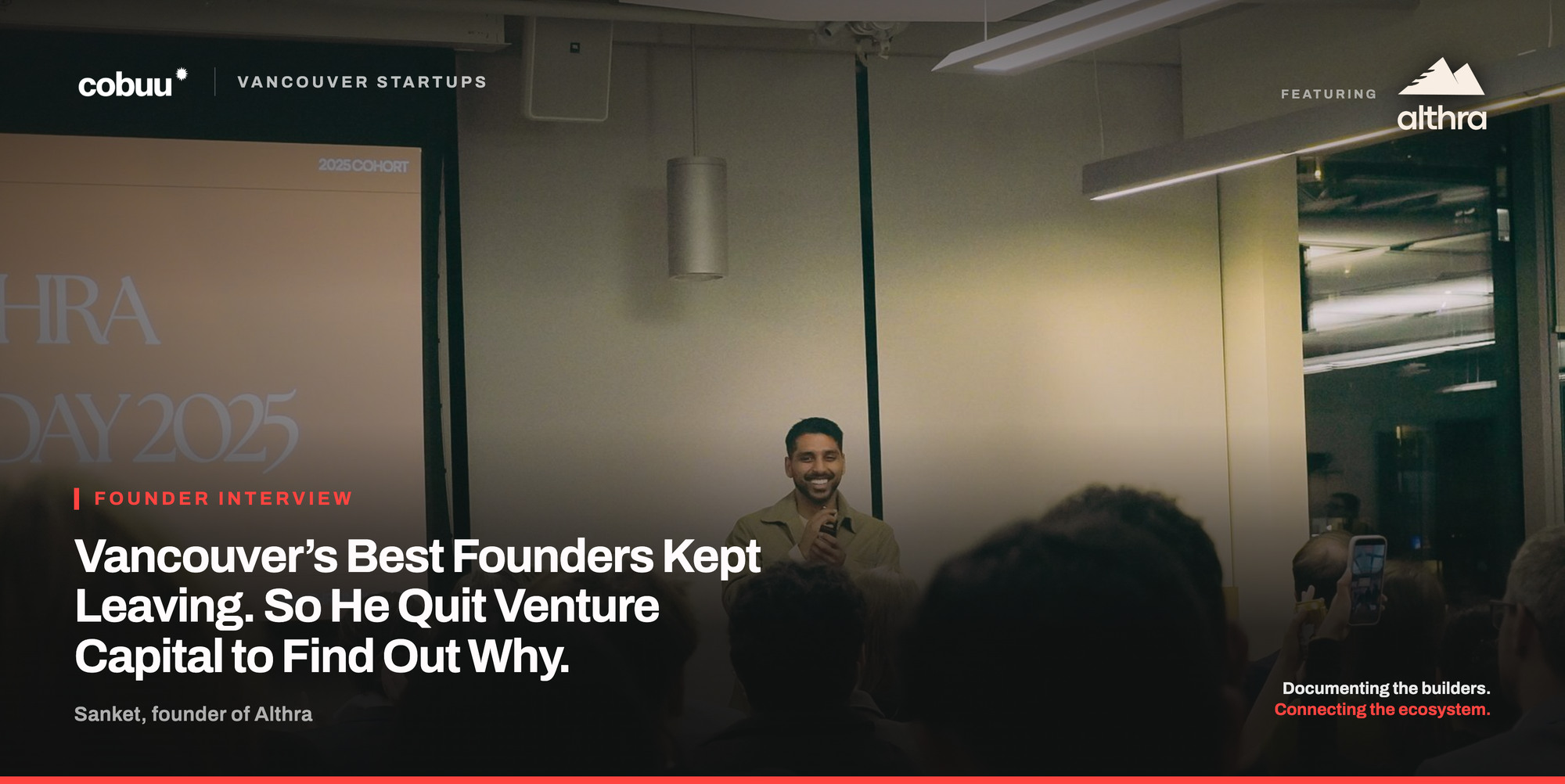
Sanket had a job most people in Vancouver’s startup scene would want. He was at Graphite Ventures, sent to British Columbia for four months with a simple mandate: find the founders worth backing.
He went to the events. He built the ecosystem relationships. He took the coffees.
And he came away with a problem.
The founders that we saw and that were visible were not ones that we would ever invest in.
The people filling the rooms were there to network, not to build. The ones actually shipping product had already left for Toronto or San Francisco, or he found them a few months too late, after the decision was made.
So he started asking the ones who left a single question: why?
The answer had almost nothing to do with money.
“You just don’t know what’s possible”
The phrase Sanket keeps circling back to is reference points.
Picture the sequence. A founder in Vancouver goes to an event hoping to meet people who are building. Instead the room is full of people collecting business cards. They try again. Same room, different night.
After the third one, the math gets obvious. Go to Toronto. Apply to Next Canada. Fly down to SF, where the conversations actually go somewhere.
But the wasted evenings are not the real cost. The real cost is quieter, and it compounds.
“If you’re building in isolation, then you’re going to accept maybe a more mediocre path forward,” Sanket says, “because you just don’t know what’s possible.”
That is the entire premise of Althra, the accelerator he left venture capital to build. The mentors who cycle through the program are not there to teach frameworks. They are there to tell founders what the last decade actually cost them: the hours, the mindset, the near misses, the version of the story that never makes the LinkedIn post.
The founding bet was almost embarrassingly simple. Put high agency founders in a room with each other. Sanket says the belief has not changed since day one. It has just been proven right.
Here is the part that surprises people: he does not want to keep anyone.
I don’t care if founders want to move to SF afterwards. But when they’re in Vancouver building, I’d love to be that ground to bring them all together.
Althra is a launch pad, not a destination. He is fine with that.
Why most founders lose the room in ninety seconds
Althra is midway through its second cohort now, with a third starting in September. The lesson from the first was blunt: a room and a program were not enough on their own. So he raised a fund.
The checks are deliberately small. This is not runway for a year and a half. It buys a founder three and a half months of going full time, and the goal at the end of it is a pre seed round.
Which is exactly where Sanket watches most founders fall over. And it is almost never about the product.
The biggest thing is not having your narrative ready and approaching an investor too early.
Revenue is the cleanest story you can tell. One of his mentors puts it in five words: sales solves all problems. True, and brutally hard. So Sanket asks early founders the harder version of the question. If you do not have traction yet, what else can you build a story on?
He has a short list.
A genuinely unique insight. This is what investors are actually reaching for with that tired line about looking for founders they can learn from. Sit through enough pitch decks and novelty becomes the only thing that makes you sit up.
Design partners or paid pilots. Proof that someone with a budget took you seriously.
Depth over breadth. A tiny group of users who open your product every single day and cannot function without it. Sanket argues this is the most underrated card in the deck, because it converts your company into a scale and distribution problem. If the market is big enough, that is a problem investors are comfortable underwriting.
What does not work is the pitch he saw over and over in Vancouver: an idea, a deck, and a request for capital to go validate it.
“Investors are not giving capital to anybody just so they can validate their idea.”
The middle school test
When applications land on his desk, Sanket screens for two things.
The first is clarity, and he means it literally. The how of your company is allowed to be complicated. The what and the why should land with a middle schooler.
Founders routinely fail this, and it costs them the room.
If I spend half the call just trying to figure out what you’re doing, I’m spending less time actually understanding whether you’re going to be worth investing in.
Deep tech and life sciences get some latitude. Most companies do not deserve any.
The second thing is velocity, though not the kind that shows up on a growth chart. He means the speed of your loop. Test the idea. Find the friction. Find the pull. Iterate. Ship again.
Is that cycle measured in days, or in months?
With technical moats collapsing, he argues, how close you sit to your customers and how fast you turn that loop is most of what you have left.
Stop asking if you should build in public
Sanket refuses to treat building in public as a philosophy. To him it is a channel decision, and the channel is decided by your customer, not by your personality.
Selling to consumers or to small businesses who find you on Instagram and TikTok? Then yes. Face to camera. The traditional version.
Selling to enterprise? Building in public looks like blog posts, knowledge base articles, and a Reddit thread about your journey. Which, he notes, is increasingly how ChatGPT and other language models find your product in the first place.
The mistake is the mismatch, and he has a line for it.
I don’t know how many mining executives are making the purchasing decisions by a TikTok that they saw.
He does not know what Althra looks like in five years
Sanket is unusually honest about this, and the honesty is deliberate. He did not want the absence of a five year answer to become a reason never to start.
“I figured out how to make 2025 work. And then I figured out how to make 2026 work. Right now, I’m in the process of figuring out how to make 2027 work.”
His rule is that twelve to sixteen months is the only planning horizon that is actually honest. Shorter than that and you are just reacting. Longer and you are writing fiction.
It is also why he describes himself as building alongside the cohort rather than above it. He is in the same position they are, one horizon at a time.
That same pragmatism shows up when the conversation turns to co founder fights. Two people arguing, he says, at least proves both of them care. The work is dragging the argument back to one question: does this move the company forward?
But most founder disagreements rest on intangibles. There is no data set to settle it with. Which is why, in his view, co CEO structures do not work. Somebody’s gut has to be final.
Healthy disagreement, then the CEO owns the holistic calls, the CTO owns the technical ones, and everyone else trusts that the right person made it.
The contrarian take on AI
Ask Sanket what AI does to the startup world and he gives you an answer that cuts both ways. It will create more founders and fewer founders at the same time.
The first half is obvious. Building got easier, so everyone can claim the title.
The second half is the part he thinks people are missing.
If you’re somebody that builds a proof of concept over a weekend, are you really a founder?
The technical moat is gone. Finding your first ten customers is not. Neither is managing people, leading through a bad quarter, or figuring out go to market. Those problems, he says, are never going away, and far fewer people have the stomach to sit inside them for years.
His prediction: a loud stretch where everyone is building, followed by a thinning. In any given vertical, a handful left standing. Not the smartest ones. The ones who cared enough about the problem to survive the part where nothing works.
Which is basically his answer for how anyone gets past the early wall at all.
Two things. A why strong enough that you did not pick your industry out of a hat. And momentum.
Expect a cold start, he says. Months where the flywheel refuses to turn. After that you need intermittent hits of there is something here. The founders who make it are the ones who can stretch one small early win across a very long stretch of nothing.
The case for staying
For a company built around Vancouver’s gaps, Sanket is fast with the city’s advantages.
It is a recruiting asset in its own right. Nature on the doorstep, and the one major Canadian city where you are not negotiating with snow. That matters enormously once you are hiring at scale.
There is a deep bench of marketing and growth talent coming out of world class consumer companies like Lululemon and Monos, which is exactly the talent that wins in a moment when distribution is the differentiator.
And there is San Francisco, two hours away. He refuses to call that a weakness. Founders should be going down on a regular cadence, he argues, purely for the exposure.
What he wants more of is ambition. His advice to anyone trying to build the ecosystem is not to think small. Start with Vancouver. Then cover the country.
Althra’s demo day is August 20.
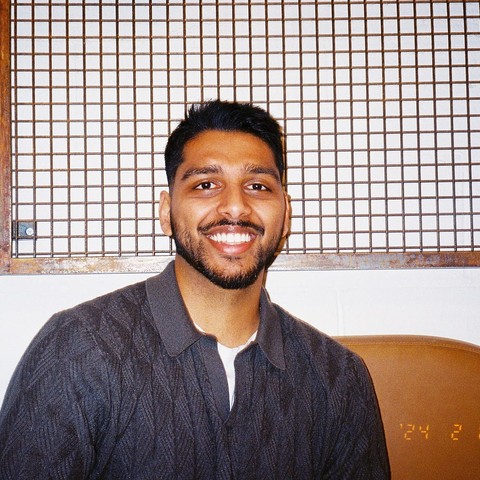

“The biggest thing is not having your narrative ready and approaching an investor too early.”