Interview
The Gap Finder
Steven Ngo has a habit of spotting problems nobody is fixing. This summer, he left his job to work on one full-time.
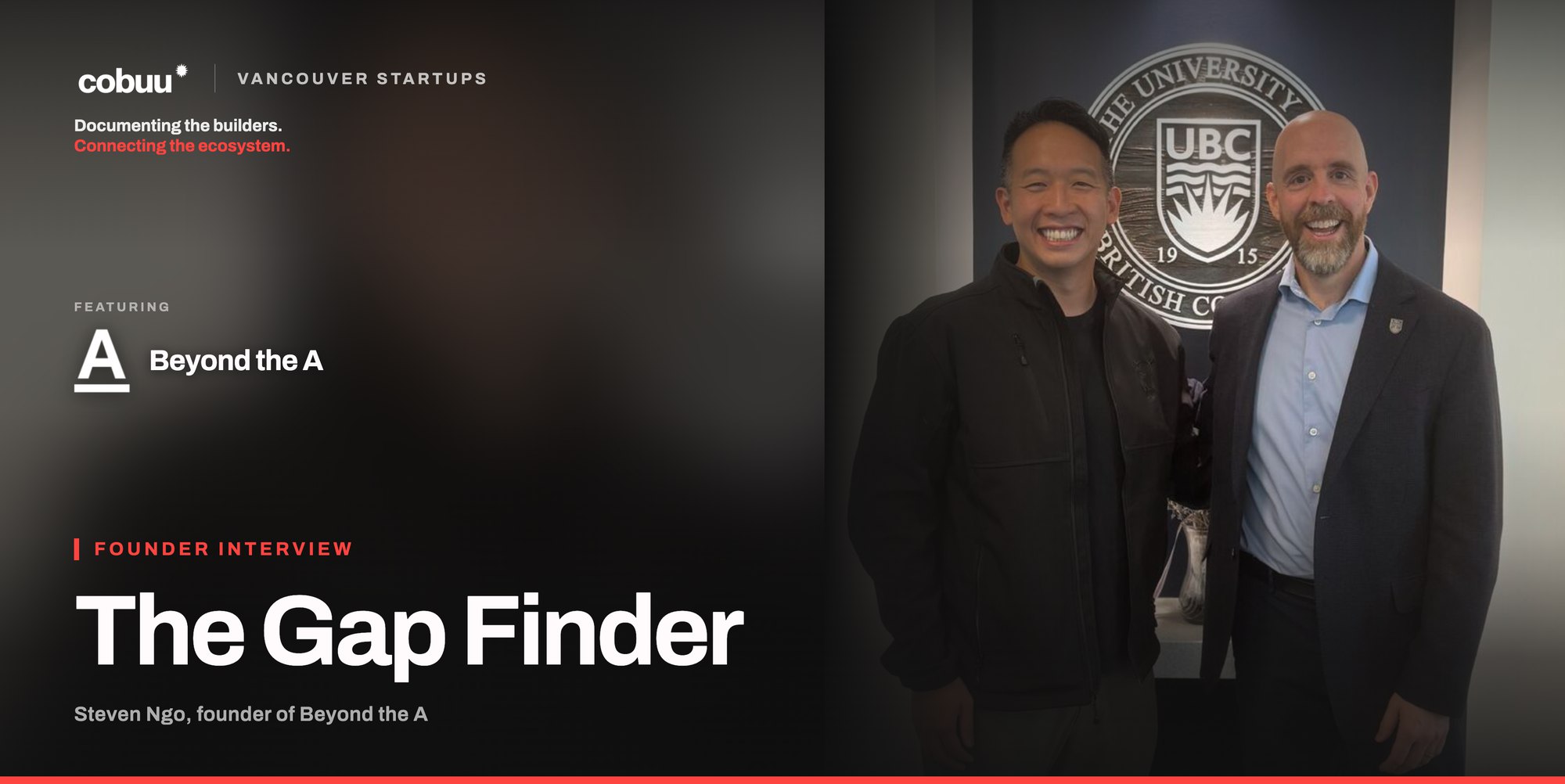
The phone would ring at 10 p.m. It was usually CBC, asking if he could be somewhere by 11.
Steven Ngo would put on a suit, walk out his front door, do the interview, and go back to work. During the pandemic, when he was speaking up about anti-Asian hate, this happened every other day. “It was wild,” he says, laughing.
His wife has a theory about this.
Steven, the moment you identify a problem, you go all in on trying to build something to fix that problem.
He concedes she’s right. “When I see a gap, if no one’s fixing it, I might as well give it a shot.”
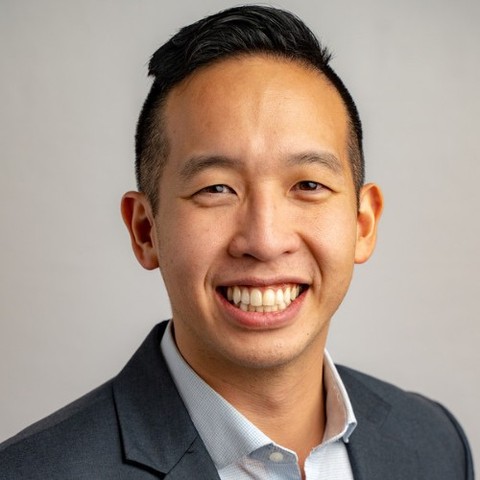
Ngo is a tech lawyer, an adjunct professor at UBC’s Allard School of Law, a past president of the Federation of Asian Canadian Lawyers BC, and a podcast host. As of August, he is also a full-time founder: after more than four years at Rivian, most recently as senior counsel, he left to run Beyond the A, the interview coaching business he has been building on the side since 2021.
It is the same instinct, now running full-time.
A lawyer who never wanted to be a lawyer
“Being a lawyer was the last thing I ever wanted to do,” he says. He studied science at UBC, headed for medical school “as one does,” and only changed course after graduating and taking a marketing job at Telus. There, he worked closely with the company’s in-house lawyer, and his picture of the profession fell apart.
“If you don’t have people in your family who are in law, you don’t know what law is,” he says. “Before that, lawyers were those who did personal injury that were on billboards. I don’t want my face on a billboard.” At Telus he saw business transactions instead, and realized that was the work he wanted. He was already preparing for the GMAT. He added the LSAT.
From there he went to Osler in Calgary, Allens in Ho Chi Minh City, and Vancouver’s Visier, where he rose to senior counsel. Rivian used Visier’s software, and Ngo negotiated that agreement himself while the automaker was still in stealth mode. When Rivian went looking for someone to lead its Canadian legal work from Vancouver, he decided quickly: “This job is mine.” Eight interviews later, it was. He was driving a Tesla at the time and disclosed it during the process, just in case it disqualified him.
He has never been a big car guy, he admits. His podcast is called Two Dads, One Car.
The gap that started with a prenatal class
The podcast began five years ago, when he and his wife were expecting their daughter. The prenatal courses on offer felt, to him, like a waste of time. “They’re all written from the mom’s perspective,” he says, “which is fine.” The running joke was that dads fall asleep in those classes.
So he told his wife he was dropping the course. “I’m going to invite 10 of my friends. I’m just going to podcast with them.” Her response: “You do you, Steven. As long as you figure it out.”
Five years on, the show is in the top 8% of podcasts, by his count, and has become a place for what he calls the unspoken truths about fatherhood. One episode he’s quick to plug features UBC President Benoit-Antoine Bacon, whom Ngo picked up from a campus parking lot before the two drove circles around campus. Listen to the episode here.
Fatherhood has changed him, too. “Fatherhood is messy. Fatherhood matures you,” he says. “It makes you realize that your own dads and moms had no idea what they were doing. Zero.”
Behind the start line
The second gap was his own, and it showed up as soon as he got to law school. His classmates arrived with maps he didn’t have. One friend’s father was a judge, and he already had a job lined up. Another’s uncle was a partner at Blakes, one of the big firms. “They already knew the game going in,” Ngo says. “I suddenly felt that I was behind the start line.”
His answer was to master the part nobody had taught him: interviewing. He later sat on firm recruitment committees, seeing the process from the inside, and once he was in-house with the autonomy to do it, he started teaching it. He is especially drawn to first-generation lawyers, the ones for whom all of it feels foreign.
Most of the work, he has found, isn’t technique. “It’s the mental blocks,” he says. “That’s actually the biggest one.”
His method starts with what he calls a verbal dump: tell him everything, as it is. “Don’t say things just because you think that’s what the other party wants to hear,” he says. Then they shape it into a story.
So much of it is storytelling. The way you start off a response and the way you end it, people remember that.
The story he returns to first is a student who failed out of SFU after falling in with the wrong crowd, then rebuilt: courses at Langara, a transfer to UBC to finish his undergrad, and admission to UBC’s law school. When they met, the student was still carrying that weight. “Within 30 seconds, I knew there was something going on here,” Ngo says. The work was reframing his path as “a rags to riches kind of story.” “You could see his body language change,” he says. “It’s not just landing a job. It’s a bit of personal transformation.”
Hyperlocal by choice
Ask how he finds these problems and he doesn’t describe a search. “The best gaps are those that are personal,” he says. “Then you know exactly what the possible solution could be.”
The clearest example is one he lived. During the pandemic, someone threw garbage in his face and called him a racial slur. When he tried to report it, he couldn’t reach the police, and the only online form was in Chinese, not English or other languages. “I’m sure there’s thousands of others going through this problem,” he says. He started something to fix it.
Last year, frustrated with the chaos happening in the US, he decided to go hyperlocal: what could he do for the block he lives on? He and a neighbour planned a block party, expecting 30 or 40 people. Up to 200 came, along with politicians, fire and ambulance crews, and a photographer sent by the City of Vancouver. Since then, neighbours have been trading meals and fruit and watching out for each other’s kids.
Loneliness is at its all-time high. When we are helping the community, we’re actually helping ourselves. It’s a human need, and it can’t be outsourced to AI.
It is also, he argues, Vancouver’s edge over Silicon Valley. “Everyone’s only one degree of separation away. If you wanted to meet the mayor, you just have to find that one person who knows the mayor. You can’t do that in San Francisco.”
The fork in the road
This year, the gap showed up in his own calendar. Beyond the A took off. “Doors started opening. Opportunities began appearing. Partnerships started forming,” he wrote on LinkedIn after his last day at Rivian. In recent months it had felt like “juggling two full-time jobs at the same time,” on top of being a dad of two and running the podcast.
During his parental leave, he had started asking different questions. How could he design a day around dropping his kids off at school and picking them up? How could he make room for big ideas and spend more of his life helping people? “As this year went on, the inner voice grew louder and louder,” he wrote. “So I made the leap.”
He called leaving “a really tough decision” and described Rivian as the best company he has ever worked for. The weeks since have been intense, he wrote, but they remind him of “the spark I felt just before law school.”
What’s next
The next gap is, predictably, one he ran into himself: there is no space in Vancouver for dads to get together and learn from each other. So in September he is launching the first Summit of Fatherhood, at the top of the British Properties in West Vancouver. The first edition is invite-only. “I want to make all the mistakes,” he says. Next year, he wants a big splash.
That tolerance for a rough first attempt runs through his advice. With students starting their first months of practice, the pattern he sees most is the need to look perfect. “They never come up to me if there’s mistakes being made, because they’re afraid of the mistakes,” he says. “No. The mistakes are where you learn.”
He gives himself the same permission, which is roughly how a lawyer ends up with a podcast, a coaching business, a block party, a fatherhood summit, and, as of this summer, a business he runs full-time.
“Life is finite,” he says. “Sometimes you feel that calling inside of you, and sometimes you’ve got to take that step.”

“When I see a gap, if no one’s fixing it, I might as well give it a shot.”