Interview
The $460 Year
Second Savour made $460 in its first year, and then the team quit. Justin Cheung, still a business student at SFU, took it over and turned about $3,000 into $70,000 of revenue in 2025.
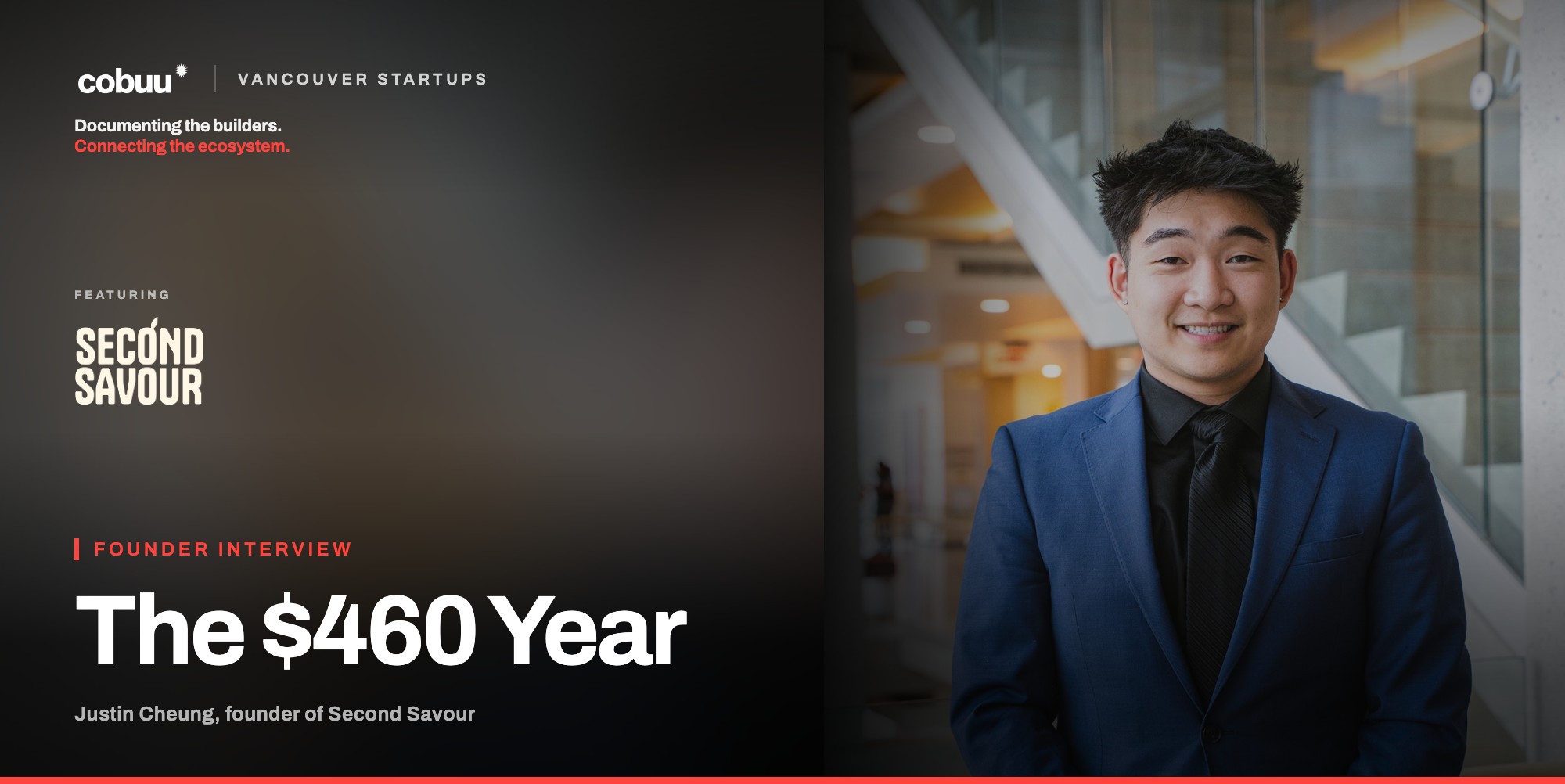
Second Savour made $460 in its first twelve months. Then everyone quit.
Everyone except Justin Cheung. “These guys weren’t taking it seriously,” he says of the original team, “and usually these Enactus projects aren’t taken seriously.” So he took it over and set himself a number: $50,000 by the end of the year, or he would call it a failure. In 2025 the company did about $70,000 in revenue, starting from roughly $3,000.
Second Savour takes the peel that juicing companies would otherwise throw away and turns it into snacks: a sweet and sour orange, a sour lemon and a bittersweet grapefruit. The line sells at Save-On-Foods. A dark chocolate orange and a white chocolate lemon are in the works with a Vancouver chocolate company, and so are deals with IGA and Fresh St. Market.
Cheung is a fifth-year student at SFU’s Beedie School of Business. He runs the company with a business partner and a team of about 20, and he wants to reach $2 million next year. None of the money that got him this far came from outside investors.
Scraping by
Second Savour began as a project in Enactus, the student entrepreneurship program where, Cheung says, UBC and SFU are “complete rivals.” It wasn’t his idea. He was part of the founding team that made the $460.
When he took over, there was almost nothing to work with. “We all worked for free,” he says. The one advantage was the raw material. Juicing companies pay by the kilogram to throw peel away, so handing a couple hundred kilograms a week to Second Savour saves them a little. “It’s probably not that much, but they still save money.” For Second Savour, the peel cost nothing.
The cash came in small pieces, mostly from school programs:
- Under $5,000through Enactus and SFU
- $3,000donated by a store that liked the mission
- $10,000from SFU’s incubator, through its eCo-op program
- Under $5,000in prize money, from competitions at Laurier, UBC, SFU and elsewhere
None of it cost them equity. The store donation came through a club role dedicated to asking companies for money, which he says only works while you’re a student. “There’s no way a business is going to give you money for free.”
The incubator is what he credits most. Each semester it takes two or three students into eCo-op and pays them $10,000 to run their own business for the term. “I would never have taken the leap if they hadn’t given me a chance,” he says.
Competitions paid the least. Many of them want AI or tech, and a snack made from citrus peel scores poorly against that. Sustainability prizes exist, he concedes, “but there are so many more competitions if your idea is tech based.” What they gave him instead was product validation, contacts and mentors. He met his main mentor at one.
The larger grants didn’t arrive until 2026: $15,000 from Buy BC, for packaging and advertising, and a separate $50,000 grant aimed at hiring.
Only recently did Cheung and his business partner put in their own money, about $75,000 between them, once they had “proof of concept that people will buy our products.”
Execution over idea
To Cheung, the idea was never the problem. “People are successful because they have good execution,” he says.
With this business idea, poor execution gets you $460 or whatever. In no world should $460 be the ceiling.
He likes proving people wrong, too. “If people talk, that’s just motivation for me.”
For Second Savour, execution started at farmers markets, which still bring in a good share of revenue. In food, he says, “you need people to taste your product or they’re not going to buy it.” If they tasted it and paid, the price was right. He still works a market now and then, even with staff to cover it, because that is where he hears “it’s too sour” or “it’s too big” and can adjust.
The harder problem is the grocery shelf, where nobody gets a sample. “In food and beverage, if you can get people to buy your product without trying it, that’s really, really good.” The Buy BC money is going into marketing, and the team is building a recipe blog, since people already bake with the peel, put it in drinks or use it as a topping.
On hiring, he is blunt. Nobody was paid in the early days, and he thinks that is how it should be. “If someone wants to get paid right at the beginning, that means they’re not the right person to do business with.” He casts a wide net and expects most people to leave. Of the eight interns on the team now, whose pay comes from a grant, he expects “maybe one or two, maybe zero” to still be there in a year or two.
His business partner stayed. She joined through Enactus, under his portfolio, after a string of people who “just weren’t cut out for it.” He runs operations and HR; she runs sales and finance. “When times are good, everyone’s happy,” he says. “Once cracks and leaks start to show, that really shows the relationship you have with the other person.”
Partway through a question about his student days, he corrects the premise. “I’m still in school, by the way.” He has five classes left and skips the winter semester, Second Savour’s busiest season. He thinks being young is the best time to build. If the company fails, he can move back in with his parents and find a job. At 40, with a family, “if you screw up, no one is catching you.”
Making connections
Getting to $2 million will take more than student programs can give. Venture capital, he expects, won’t come until Second Savour reaches about $1 million in ARR, because consumer goods don’t scale like software. He thinks investors should look beyond tech but understands why they don’t: “They need to make money too.”
For now he is making connections. He keeps in touch with the mentors and other people he has met along the way, and every quarter he updates them and catches up over coffee or dinner.
He hasn’t asked any of them for money.

“The idea doesn’t really matter; execution is the main thing.”